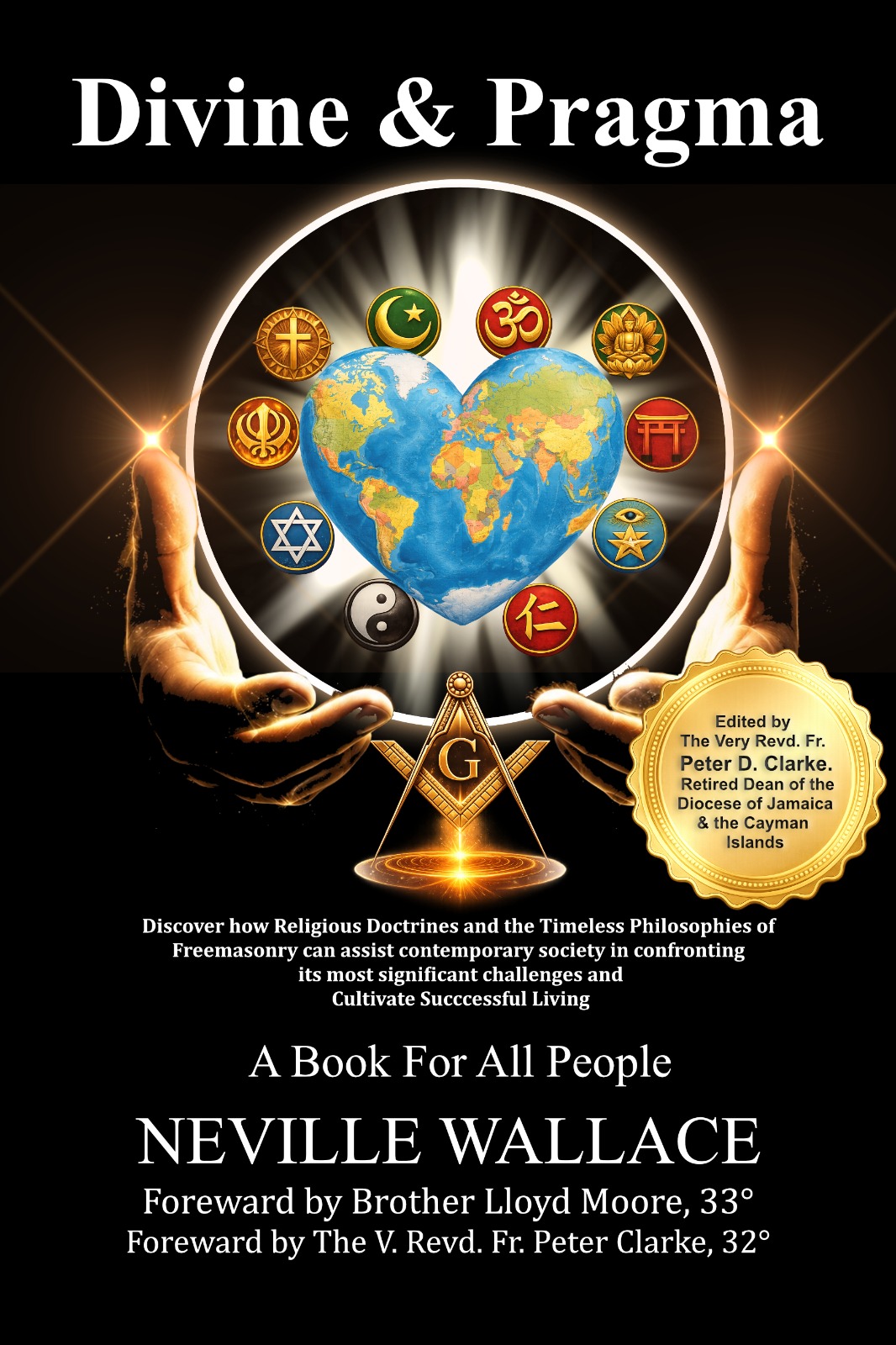
Book
Devine & Pragma
by Neville Wallace
Explore how the principles of Religious Doctrine and the enduring philosophies of Freemasonry—such as self-improvement, unity, justice, and perseverance—can aid modern society in tackling its most pressing issues and fostering a successful life. Freemasonry and religious doctrine are united by their core objectives: promoting moral integrity and nurturing a meaningful community. By merging Masonic ideals of self-improvement, unity, and perseverance with personal faith, individuals can establish a strong foundation against the fragmentation of modern life, develop resilient character, and approach contemporary challenges with ethical intent.
The enduring philosophies of Freemasonry—highlighting self-improvement, unity, justice, andperseverance—serve as a vital moral guide for today's society. By aligning these principles with essential religious teachings, individuals can create a successful, purposeful, and interconnected lifestyle while addressing modern issues such as social isolation and moral uncertainty.
Freemasonry and religious doctrine emphasize the importance of leading a virtuous, purpose- driven existence. By combining these common values—self-improvement, unity, justice, and perseverance—individuals can forge a robust moral compass, surmount social fragmentation, and navigate current crises with significant clarity. The timeless philosophies of Freemasonry provide a framework for confronting contemporary social challenges. By integrating these principles with religious teachings, individuals can foster successful and meaningful lives. This combination offers the moral foundation, community cohesion, and resilience necessary to tackle the complexities of modern life.
Bridging Doctrine and Masonic Philosophy
Freemasonry is not classified as a religion; however, it universally necessitates a belief in a Supreme Being. It serves as a conduit for individuals of various faiths to come together, united by shared values of morality and mutual respect. When harmonized with particular religious doctrines, Masonic principles assist believers in transforming their faith from abstract concepts into active, daily practice. Addressing Contemporary Challenges.
These enduring principles provide practical solutions to the most urgent crises of the 21st century: • Self-Improvement (Overcoming Modern Isolation): Just as operative stonemasons shaped rough stones into smooth blocks, contemporary Masons utilize philosophy to gain mastery over their own impulses and passions. In an age characterized by distraction and digital polarization, this virtue fosters the discipline necessary to sustain a balanced and intentional life.
- Unity (Fostering Connection):
Freemasonry underscores the importance of brotherly love and the equality of all its members. The lodge functions as a refuge where societal divisions—such as worldly wealth, social status, or religious differences—are set aside. This model of camaraderie offers a framework for healing divided communities and combating social isolation. • Justice (Promoting Ethical Action):
Freemasons are instructed to embody the cardinal virtue of justice. In a world grappling with systemic inequalities, this philosophy serves as a reminder for individuals to treat everyone equitably, reject bias, and advocate for human dignity. • Perseverance (Building Resilience):
Patience and perseverance are essential for navigating both personal and professional challenges. Masonic philosophy imparts that consistent practice and the ability to endure difficulties with grace foster true wisdom and long-term success.
Cultivating Successful Living
Combining these philosophies with religious faith fosters a life of meaning and lasting success:
- A Shared Moral Compass: Integrating religious teachings with the cardinal virtues of temperance, fortitude, prudence, and justice gives individuals clear guidelines for ethical decision-making.
- Focus on Charity: Active participation in community service and relief programs directs focus away from self-interest and toward helping the vulnerable, which yields deep emotional fulfillment.
Acquire a Copy
Banking Information
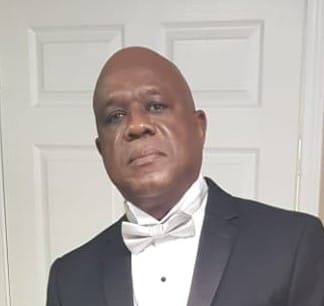
About the Author
Neville Wallace is a distinguished Masonic author with over fifteen years of experience in Freemasonry.
Learn more