Book
The Evolution of Relevance
by Neville Wallace
Listen
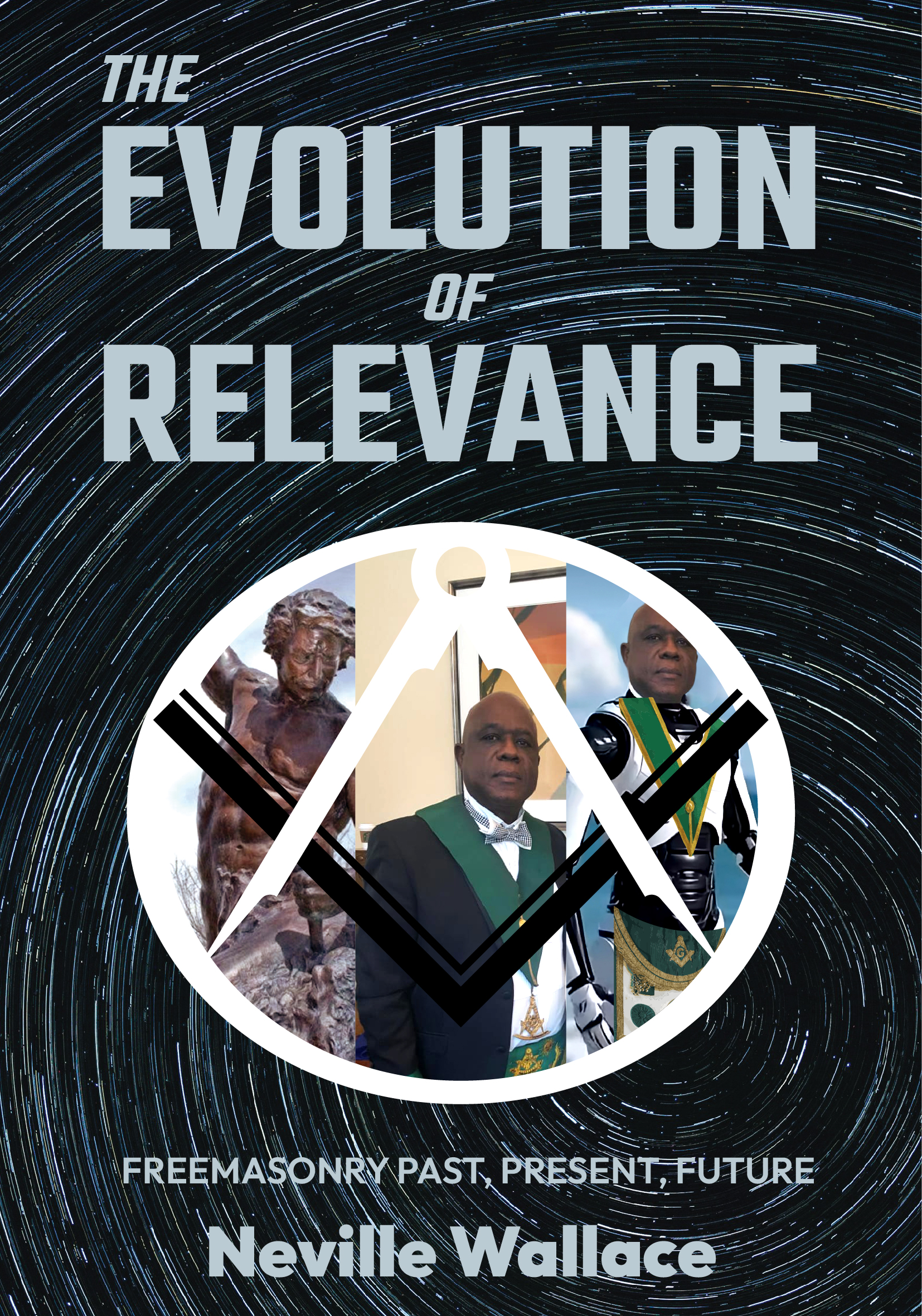
Worshipful Brother Neville Wallace travels back in time seven hundred years to explore the roots of Freemasonry and its relevance in today’s contemporary society.
Interweaving its origins with incredible illustrations, Evolution of Relevance tells the story of the origins of Freemasonry and helps us better understand its evolution, from Operative Freemasonry to Speculative Freemasonry to modern 21st-century Freemasonry
Worshipful Brother Neville Wallace bring our forefathers to life with a beautiful, accurate reconstructions that visually trace each step in our evolutionary history. Combined with clear prose, this comprehensive book provides a rich history of each stage of Freemasons evolution, from the guilds of stonemasons and cathedral builders of the Middle Ages. With the decline of cathedral building, some lodges of operative (working) masons began to accept honorary members to bolster their declining membership. From a few of these lodges developed modern symbolic or speculative Freemasonry, which particularly in the 17th and 18th centuries adopted the rites and trappings of ancient religious orders and of chivalric brotherhoods.
Freemasonry, a centuries-old fraternity with humble beginnings in the medieval stonemasons’ guilds of Europe, has since blossomed into a worldwide organization with a diverse range of regional practices. At its core, Freemasonry seeks to promote brotherhood and self-improvement, using allegorical rituals and symbolism to impart moral and spiritual lessons. This book will explore the fascinating journey of Freemasonry as it has evolved and adapted to different cultures and traditions around the world.
The importance of understanding regional variations cannot be understated. As Freemasonry spread to far-flung corners of the globe, it encountered a myriad of local customs, beliefs, and historical contexts, each of which left an indelible mark on the fraternity. By examining these regional variations, we can not only appreciate the rich tapestry of Freemasonry’s history but also recognize the unique cultural influences that have shaped its development.
This exploration of regional variations will take you on a captivating journey through the world of Freemasonry, from the British Isles to the Americas, continental Europe, Africa, Asia, and Oceania. Along the way, we will delve into the historical and cultural influences that have given rise to each region’s distinct Masonic practices and traditions, providing a comprehensive and engaging look at the evolution of this intriguing organization.
Freemasonry has, almost from its inception, encountered considerable opposition from organized religion, especially from the Roman Catholic Church, and from various states. Freemasonry is not a Christian institution, though it has often been mistaken for such. Freemasonry contains many of the elements of a religion; its teachings enjoin morality, charity, and obedience to the law of the land. In most traditions, the applicant for admission is required to be an adult male, and all applicants must also believe in the existence of a Supreme Being and in the immortality of the soul. In practice, some lodges have been charged with prejudice against Jews, Catholics, and nonwhites. Generally, Freemasonry in Latin countries has attracted those who question religious dogma or who oppose the clergy whereas in the Anglo-Saxon countries the membership is drawn largely from among white Protestants. The modern French tradition, founded in the 19th century and known as Co-Freemasonry or Le Droit Humain, admits both women and men.
In most lodges in most countries, Freemasons are divided into three major degrees—entered apprentice, fellow of the craft, and master mason. In many lodges there are numerous degrees—sometimes as many as a thousand—superimposed on the three major divisions; these organizational features are not uniform from country to country.
In addition to the main bodies of Freemasonry derived from the British tradition, there are also a number of appendant groups that are primarily social or recreational in character, having no official standing in Freemasonry but drawing their membership from the higher degrees of the society. They are especially prevalent in the United States. Among those known for their charitable work are the Ancient Arabic Order of the Nobles of the Mystic Shrine (the “Shriners”).
In Britain and certain other countries there are separate lodges restricted to women. In addition, female relatives of master masons may join the Order of the Eastern Star, which is open to both women and men; boys may join the Order of DeMolay or the Order of the Builders; and girls may join the Order of Job’s Daughters or the Order of the Rainbow. English, Scottish and Irish Masons are forbidden to affiliate with any of the recreational organizations or quasi-Masonic societies, on pain of suspension.
This is essential reading for anyone interested in Freemasonry origin and relevance today includes:
- Freemasonry and the Middle Ages
- Freemasonry and Social Network
- Freemasonry and Colonialism
- Freemasonry and its Continental Variations
- Freemasonry and Social Change
- Freemasonry and the Church and Society
- Freemasonry and the Politics and Social Change
- Freemasonry and Social Mobility
- Freemasonry in the Contemporary Society
The Evolution of Relevance is a comprehensive and perceptive look at the factors behind the rise Freemasonry. Worshipful Brother Neville Wallace examines the application of Operative Masons to the Speculative Masons, then establishes his historical social evolution to its relevance in today’s contemporary.
Acquire a Copy
USD $60 - JMD $9,000
Banking Information
Account Name: The Glenlyon Foundation Ltd
Bank: Sagicor Bank
Branch Name: Hope Road
Account Number: 5502746218
Account Type: Chequing

About the Author
Neville Wallace is a distinguished Masonic author with over fifteen years of experience in Freemasonry.
Learn more