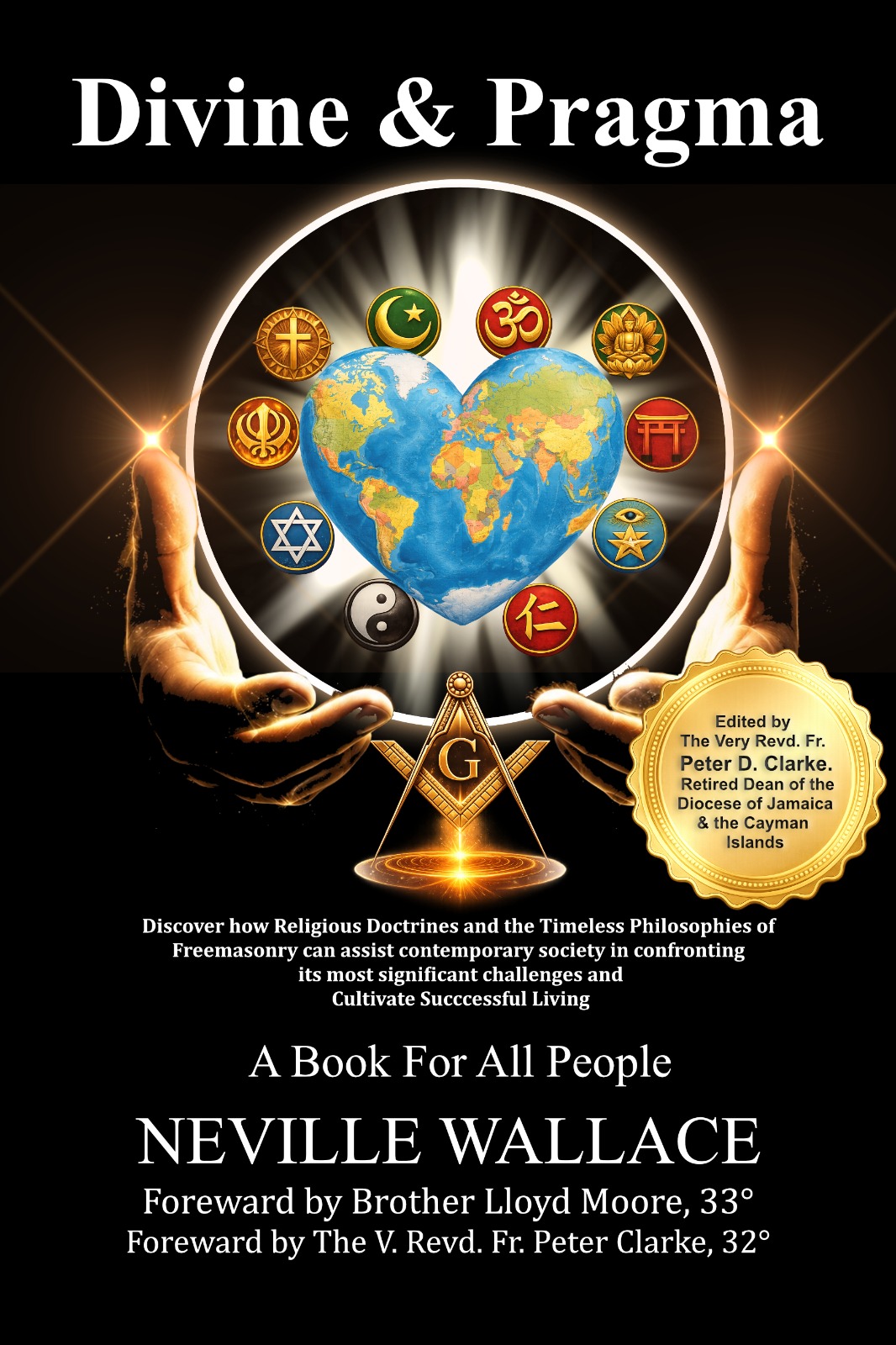
Explore how the principles of Religious Doctrine and the enduring philosophies of Freemasonry—such as self-improvement, unity, justice, and perseverance—can aid modern society in tackling its most pressing issues and fostering a successful life. Freemasonry and religious doctrine are united by their core objectives: promoting moral integrity and nurturing a meaningful community. By merging Masonic ideals of self-improvement, unity, and perseverance with personal faith, individuals can establish a strong foundation against the fragmentation of modern life, develop resilient character, and approach contemporary challenges with ethical intent. The enduring philosophies of Freemasonry—highlighting self-improvement, unity, justice, andperseverance—serve as a vital moral guide for today's society. By aligning these principles with essential religious teachings, individuals can create a successful, purposeful, and interconnected lifestyle while addressing modern issues such as social isolation and moral uncertainty. Freemasonry and religious doctrine emphasize the importance of leading a virtuous, purpose- driven existence. By combining these common values—self-improvement, unity, justice, and perseverance—individuals can forge a robust moral compass, surmount social fragmentation, and navigate current crises with significant clarity. The timeless philosophies of Freemasonry provide a framework for confronting contemporary social challenges. By integrating these principles with religious teachings, individuals can foster successful and meaningful lives. This combination offers the moral foundation, community cohesion, and resilience necessary to tackle the complexities of modern life. Bridging Doctrine and Masonic Philosophy Freemasonry is not classified as a religion; however, it universally necessitates a belief in a Supreme Being. It serves as a conduit for individuals of various faiths to come together, united by shared values of morality and mutual respect. When harmonized with particular religious doctrines, Masonic principles assist believers in transforming their faith from abstract concepts into active, daily practice. Addressing Contemporary Challenges. These enduring principles provide practical solutions to the most urgent crises of the 21st century: • Self-Improvement (Overcoming Modern Isolation): Just as operative stonemasons shaped rough stones into smooth blocks, contemporary Masons utilize philosophy to gain mastery over their own impulses and passions. In an age characterized by distraction and digital polarization, this virtue fosters the discipline necessary to sustain a balanced and intentional life. Unity (Fostering Connection): Freemasonry underscores the importance of brotherly love and the equality of all its members. The lodge functions as a refuge where societal divisions—such as worldly wealth, social status, or religious differences—are set aside. This model of camaraderie offers a framework for healing divided communities and combating social isolation. • Justice (Promoting Ethical Action): Freemasons are instructed to embody the cardinal virtue of justice. In a world grappling with systemic inequalities, this philosophy serves as a reminder for individuals to treat everyone equitably, reject bias, and advocate for human dignity. • Perseverance (Building Resilience): Patience and perseverance are essential for navigating both personal and professional challenges. Masonic philosophy imparts that consistent practice and the ability to endure difficulties with grace foster true wisdom and long-term success. Cultivating Successful Living Combining these philosophies with religious faith fosters a life of meaning and lasting success: A Shared Moral Compass: Integrating religious teachings with the cardinal virtues of temperance, fortitude, prudence, and justice gives individuals clear guidelines for ethical decision-making. Focus on Charity: Active participation in community service and relief programs directs focus away from self-interest and toward helping the vulnerable, which yields deep emotional fulfillment.
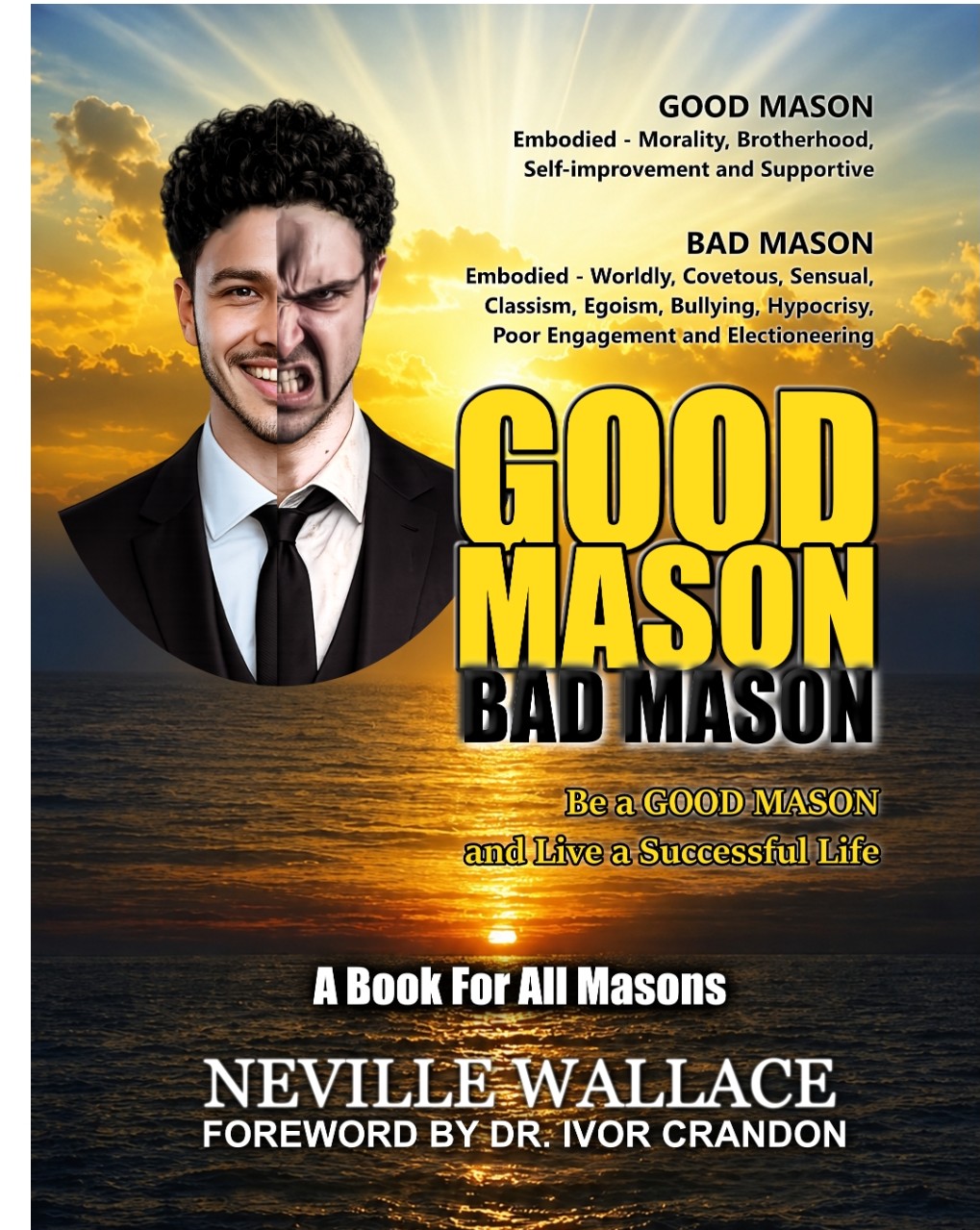
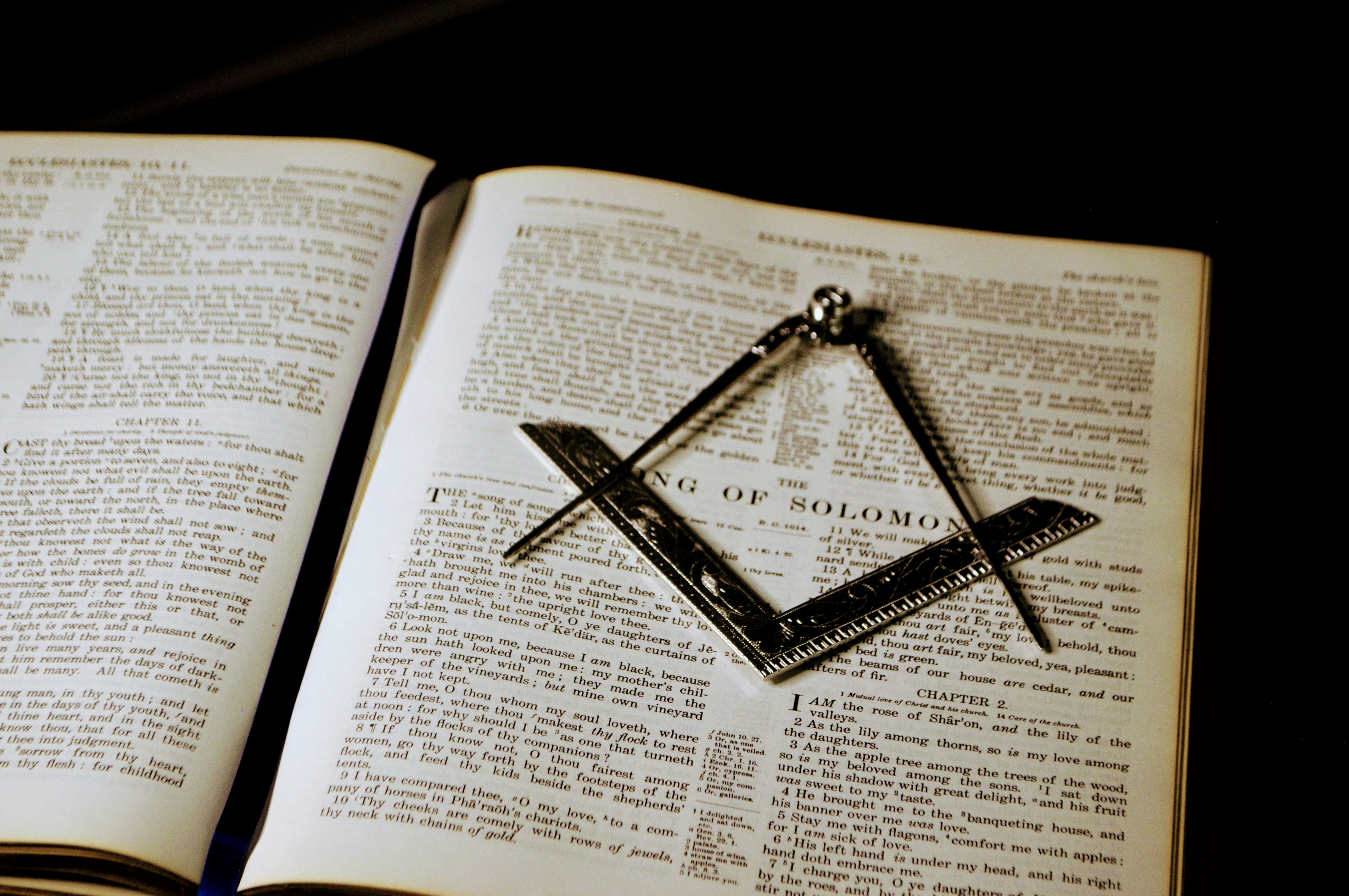
“He who is worldly, covetous, or sensual must change before he can be a Good Mason.” – Morals and Dogma, Albert Pike. "Good" is not a hazy feeling or a state of being; it is an active, architectural process of construction. To be a "good" Freemason is to be a moral craftsman who constructs his character using timeless tools. This construction begins with the Moral and Ethical Foundation. Integrity is our Square, ensuring our actions match our words and that our honor is the bedrock of trust. Tolerance is our Level, teaching us to meet all men equally and listen without prejudice. Temperance is our Compasses, circumscribing our desires and proving that true power lies in self-restraint. Justice is our Plumb Line, an unyielding standard of rectitude that ensures we judge fairly and act uprightly. These are not mere symbols, but technologies for the soul that keep us balanced in a chaotic world. Building upon this foundation requires a Commitment to Self-Improvement. A Mason is a "Seeker of Light," defined by intellectual humility and a hunger for wisdom. We acknowledge that we are "Rough Ashlars"—imperfect stones full of potential that must be shaped by the gavel of conscience and the chisel of experience. This mindset rejects the arrogance of being "finished" and embraces the hard, daily work of becoming better. We are not just admirers of the plan; we are laborers in the workshop of the self, constantly smoothing our rough edges to fit into a grander spiritual design. Personal growth has no purpose if it does not serve others. We must transition from shaping the stone to placing it in the wall through Responsibility and Duty. Fraternal Duty acts as the mortar, binding us through active support and the defense of a brother’s reputation. Charity is the trowel that spreads this cement; it is not merely writing checks, but "Relief" in its truest form—proactive love that restores human dignity and strengthens the community. Fidelity serves as the keystone, locking the structure together through unwavering loyalty to the Craft’s laws and traditions. Together, these duties ensure we are not building for vanity, but for the stability and service of humanity. To sustain this work, we must exercise Discreet and Prudent Conduct. Discretion is not sinister secrecy, but the respectful guarding of trust and the creation of a safe sanctuary where vulnerability can exist. Crucially, this must be paired with Balance. Using the 24-Inch Gauge, we prioritize our time, understanding that God, family, and profession must come before the Lodge. A Mason who neglects his home to build the fraternity has failed in his architecture. The Lodge is meant to support the temple of a man’s life, not consume it. True wisdom lies in integrating these virtues so that the light of the Craft enhances, rather than overshadows, our daily responsibilities. Ultimately, Freemasonry is not a spectator sport; it demands Active and Sincere Participation. The life of the Lodge depends on Regular Attendance, a Willingness to Serve in any capacity, and a deep Respect for Ritual as a method of moral instruction. We must also be clear about what a Mason is not: he is not seeking a substitute for religion, he is not a political operative, and he is not motivated by personal gain or social climbing. A good Mason is simply a good man who builds his life by the square, walks by the plumb, and meets upon the level, striving to be happy, free, and a true friend to every man.
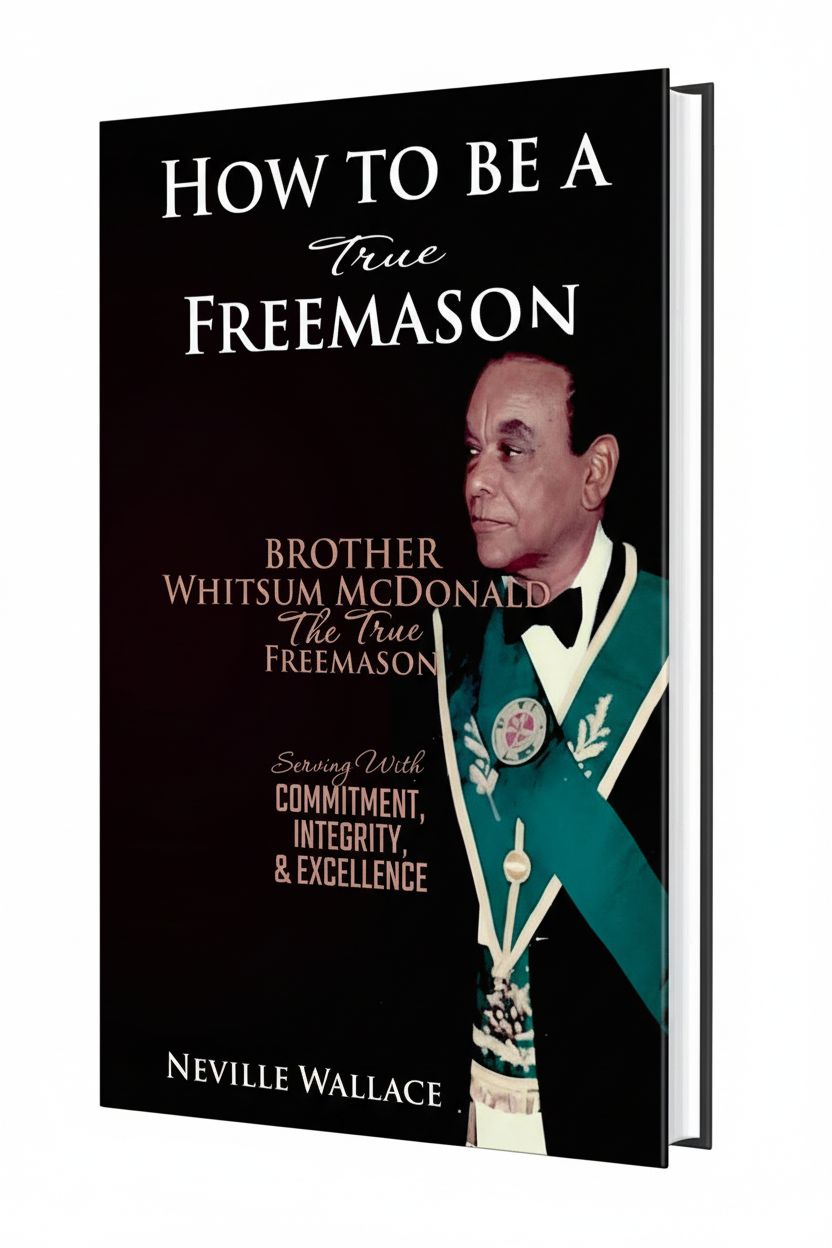
Explore the remarkable life of Brother Whitsun Albert McDonald—a man whose leadership, integrity, and service reflect the enduring values of Freemasonry. From his initiation into Freemasonry in 1942 in the midst of World War II to his pivotal role in shaping Jamaica’s post-independence housing policies, McDonald embodied the Craft’s principles of brotherhood, self-improvement, and service to humanity. Freemasonry emphasizes high moral standards and ethical behaviour. Members are encouraged to practice integrity, honesty, and impact fairness in all aspects of life, which are essential qualities for good leadership. It’s no coincidence that so many trailblazers and prominent leaders from history have been Freemasons. During the year 1951 when Brother McDonald was Master of The Glenlyon Lodge No. 346 S.C., the island was struck by the devastating Hurricane Charlie. In the aftermath he was charged by the Government of Jamaica to head the Hurricane Housing organization in Jamaica with focused on rebuilding damaged constructing new housing. He was later appointed Director of Housing and subsequently Permanent Secretary in the Ministry of Housing. He spearheaded efforts to rebuild targeted squatter communities and bridge social divides. His legacy demonstrates how Masonic values—integrity, fairness, mentorship, and collaboration—can transform both individual character and national destiny. Brother McDonald commitment to bridging socio-economic gap, through housing policies echoed our Masonic values of Brotherhood, collaboration, and the pursuit of a common good. He brought the principles of the Craft into the public sphere, by embodying leadership and fraternity during critical moments in Jamaica history. The 1970s was a critical and complex period in Jamaica's post-independence history. This era saw significant efforts to advance social justice aims to achieve greater economic equality, human rights and access to education and housing. Brother Whitsun McDonald was a key figure in shaping the housing policies which eventually lead to the creation of National Housing Trust (NHT), which bridged the revolutionary era and the foundational periods of the Jamaica. This book not only chronicles Brother McDonald’s journey but also reveals how Freemasonry’s timeless ideals shaped his leadership and public service. His life stands as a shining example of what it truly means to be a Freemason: a man dedicated to brotherhood, harmony, and the common good. Although this book reflects the experiences, lessons, insights and wisdom of Brother Whitsun McDonald, spanning over seven (7) decades, it should resonate well with those who have an interest in applying the Masonic Working Tools for self-improvement, which involves using these symbolic tools to guide your character development and daily actions. By reflecting on these tools' lessons, you can cultivate virtue, improve your relationships, and build a more purposeful life. In addition, the book can serve as a valuable guide/toolkit for Freemasons and non-Freemasons alike in their own personal lives and career, serving communities with Integrity, Commitment and Excellence. In honour of Brother Whitsun Albert McDonald, we present to you this memoir "How to be a True Freemason" as an inspiration and guide to those who strive for self-improvement, build camaraderie with each other, understand the value of mentorship, collaboration, and serving our communities.
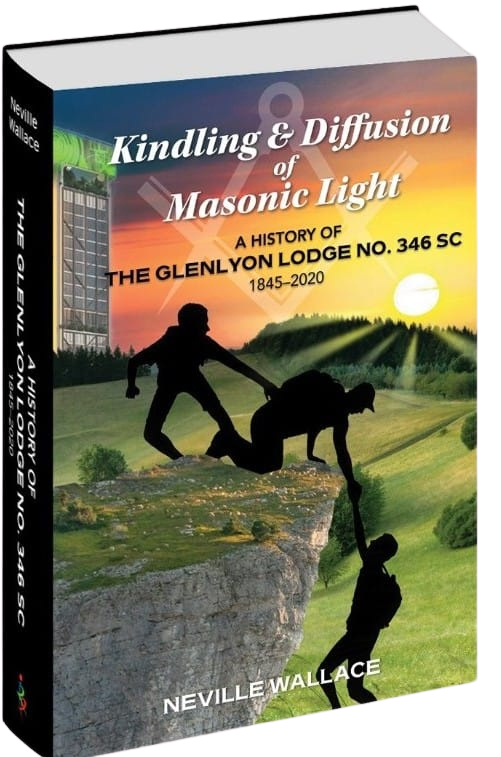
As part of The Glenlyon Lodge No. 346 S.C. celebration of its 175th anniversary, we have produced this commemorative book, building on the foundations of earlier efforts to chronicle the history of the Lodge since its founding in 1845. It has been a long chase for information, which saw us poring over Lodge Minutes, consulting with venerable members and researching earlier publications. In the end, we have proudly prepared biographical sketches of some outstanding and inspiring members, uncovered the early influence on the Lodge of the Royal Lodge No. 102 E.C., and developed a roster of members who have joined the Lodge over the year. The Lodge was named after George Murray, Lord Glenlyon, the 66th Grand Master Mason of Scotland, who was installed in 1843. There may also have been a supplementary reason to use the name “Glenlyon” in that the Lodge was founded in 1845 which coincided with Lord Glenlyon’s appointment in that year as Grand Master of the Order of the Temple in Scotland. The Glenlyon Lodge No. 346 S.C. was among more than 100 Lodges that were chartered during his period in office, while he was still Lord Glenlyon. It was common practice amongst early Freemasons to name Lodges after Saints and Princes who were held in high esteem amongst English Freemasons. Freemasonry is a peculiar system of morality, veiled in allegory and demonstrated by symbols. This conditioned reply for almost all brethren, when asked just what is Freemasonry. Although it is entirely correct, the answer is vague and leaves the question unanswered, and while much is written delving into the details, it still does not provide any real clarity. Freemasonry is fundamentally a self-improvement, volunteer association that teaches moral, intellectual, and spiritual lessons through three initiation ceremonies. Freemasonry’s three degrees are modeled after a craftsman’s progress: Apprentice, Fellowcraft, and Master Mason. Freemasonry was, and remains, open to all men of good reputation who profess a belief in Deity (referred to in lodge as The Supreme Architect of the Universe). By the 1750s a variety of Christian and non-Christian, European, and non-European men, and a few women, were members. Freemasonry grew popular within cities as political, commercial, and intellectual elites gathered within Lodges. With aristocratic, and later royal patronage, Freemasonry evolved into the preeminent fraternal organization of the eighteenth century. The earliest records of American Masonic Lodges are to be found in Philadelphia, USA. History tells us that in 1732, Boston’s St. John’s Lodge was duly constituted by the Grand Lodges of England, thereby claiming the distinction of being the oldest Lodge in North America. Interwoven with the period of British Enlightenment, Masonic Lodges formed throughout Europe and the Americas. The network of Scottish, English, and Irish Lodges helped knit the British commercial empire together. As the general origins of Freemasonry and its layered symbolism remain a mystery to the uninitiated and even for some of seasoned Brethren, there is much to learn from the treasure trove of information that exists in the Masonic world. Masonic teachings have helped so many members over the centuries learn the skills to equip them for leadership roles in society, including areas such as politics, science and the arts. For most, it is next to impossible to gather and grasp even a small fraction of the knowledge that has been passed down to us through the generations and remains well hidden in many centuries worth of legends and traditions. Regrettably, the most pertinent information is still transferred via word of mouth to those who are genuinely interested and willing to stay after Lodge meetings and talk with Senior Brethren. I treasure the memory of the late nights, talking about Freemasonry and the various aspects thereof, long after the Tyler’s Toast was said and the rest of the Brethren had gone home. Ultimately, there is only so much that can be conveyed accurately via word of mouth. It is unfortunate that this tradition of talking with senior Brethren is often overlooked, and that the young Brethren are mostly left to their own devices. In a lot of cases, the new Brethren do not even know that this is an option, often just conducting their personal research online and often left more confused than when they started. As author, my responsibility runs a bit deeper than solely compiling and similarly disseminating some aspects of the history of The Glenlyon Lodge. Thus, I gave into the particular academic allure of complementing these compilations, by finding and recording the lesser-known details and sparsely documented areas as well as missing information. The research materials were mostly sourced from the incredible, although obscure reference online sites, and available old minutes books. There are also references to some excellent independent works and documents. Some were sourced from personal collections, and Masonic archives. It is with reverence and sincere appreciation we thank our predecessors for their efforts in ensuring we have these records have been preserved. I trust that through the extensive use of these trusted sources, all the corroborated research and the verification efforts, we can ensure that our history will continue to live on undiluted in the minds of the next generation of Masons. This work is my personal journey into the history of The Glenlyon Lodge and dogma of the craft. It also enumerates our Lodges’ contribution by highlighting “Freemasonry in Post-Emancipated Jamaica, 1848 – 1895”, its part played in the history of Scottish Freemasonry in Jamaica and we hope to carry that tradition, adhering to, working by, and promoting Freemasonic tenets. Several chapters were written and rewritten numerous times to make sense of the where, the who, and the why. My idea is if I had to read one book to get up to speed with the history of The Glenlyon Lodge, then this would be it. In hindsight, it was by all accounts an audacious and foolhardy attempt to expand my personal knowledge and to distill the troves of information spanning across the constitutions. I sincerely hope that this work will be a good stepping stone from which to advance your own personal knowledge of The Glenlyon Lodge. Thus, to the Brethren reading this, I ask that this body of research serves to compliment your individual explorations and that you always remember your charge ever to continue your daily advancement in the knowledge of our beautiful craft. This book is intended to be a keepsake and a reference for those who desire a deeper knowledge of The Glenlyon Lodge, its proceedings, the personalities of the members, their contribution to the growth of the Lodge, and the contributions the Lodge has made to the Scottish Freemasonry in Jamaica and The Bahamas. It also includes discourses written by some of our most esteemed Brethren, as well as some honest unfiltered interviews from members. As one fellow Brethren said: “Christianity is to make bad men good, and Freemasonry is to make good men better.” And, if I might add, The Glenlyon Lodge’s mission is to make better men great! Herein, I have also highlighted some of our challenges and how we resolved them particularly overcome them, especially in the midst of a worldwide pandemic which disrupted our lives, the economy, and our traditions. As you may imagine, we had to include an engaging article on the role of technology and how it may influence the way we conduct Lodge meetings in future. This is the first known attempt to assemble such a vast information in one place, outside of the iCloud: A ‘must-have’ for the serious student of Scottish Freemasonry, existing Lodges members, or descendants of former Lodge members and I daresay an enjoyable read. Scottish Freemasonry in Jamaica and The Glenlyon Lodge in particular has a rich and complex history, playing a significant role in the development of the Jamaica. Through charitable works, community service, contributing to the welfare of its Members and families and fostering dialogue on important issues, and Brethren like Worshipful Brother Samuel Constantine Burke, Esq, Freemasonry has made lasting contributions to Jamaica society. However, as stated previously, the organization faces challenges, including perceptions of secrecy, religious opposition, and still issues of racial and class inclusivity. By addressing these challenges and remaining true to its core values, Freemasonry has the potential to continue its positive influence in Jamaica. Freemasonry and Post-Emancipation Jamaica have a rich and complex history. After Emancipation in 1838, Jamaica experienced significant social, economic, and political changes. Freemasonry, which had been established on the island since the 18th century, played a role in this transition. Many Jamaican intellectuals and leaders were Freemasons. They saw Masonry as a way to promote social justice, equality, political development of the island and self-improvement, which aligned with their struggles for political and economic empowerment. After Emancipation in 1838, Freemasonry became a powerful force in Jamaican society, particularly among the emerging black middle class. Freemasonry also provided a space for social mobility and community building, particularly among the emerging black middle class. Lodges were established in various parts of the island, with names like “Unity and Friendship” and “Love and Charity,” reflecting the values of brotherhood and solidarity. However, it’s important to note that Freemasonry in Jamaica also had its contradictions. Some critics argue that Masonry reinforced class divisions and elitism, while others saw it as a means of cultural assimilation and imitation of European values. Overall, the relationship between Freemasonry and Post-Emancipation Jamaica reflects the complex negotiations of identity, power, and social change in the Caribbean during this period. Scottish Freemasonry in Post-Emancipation Jamaica, in particular members of The Glenlyon Lodge was characterized by: Freemasonry offered a sense of community and brotherhood, which was especially important for newly freed slaves and their descendants. Political and social activism: Many Jamaican Freemasons were involved in the struggle for political and social rights, using the fraternity as a platform for activism. The fraternity provided opportunities for social mobility and education, helping to empower black Jamaicans. The first Masonic lodge in Jamaica was established in 1738, but it wasn’t until after Emancipation that Freemasonry became more widespread among the black population. Freemasonry in Jamaica was closely tied to the development of the Pan-African movement and the struggle for independence. Jamaican Freemasons were known for their philanthropic efforts, particularly in the areas of education and healthcare. The fraternity also played a role in the development of Jamaican culture, hugely influencing music, art, and literature. Some Jamaican Freemasons were also involved in the formation of the People’s National Party (PNP) and the Jamaica Labour Party (JLP), the two main political parties in Jamaica. Jamaican Freemasons have made significant contributions to the development of the country, including the establishment of schools, hospitals, institutions and community organizations. Growth and expansion: Freemasonry spread rapidly among the newly freed slaves and their descendants, offering a sense of community and brotherhood. Overall, Scottish Freemasonry in Post-Emancipation Jamaica served as a powerful force for social change and community building and shaping the island’s history and cultural landscape.